
AI Transition Period, World Model-Based Industrial Strategy
Session Overview
AI is evolving rapidly. As it expands into planning, reasoning, autonomy, and physical AI, there's growing discussion about its potential to replace not just cognitive labor but physical labor as well. Still, this is a transition period — the technology is still maturing, and real-world industrial settings face practical constraints: limited data, labeling costs, distribution shift, and operational risk.
AI adoption tends to happen in stages. Early on, adoption itself is a competitive edge; once it becomes widespread, the ability to integrate and re-architect makes the difference. Productivity gains can create a temporary shock, but over the long run they form a new competitive equilibrium. Companies today are addressing these limits either by adopting general-purpose AI or by building vertical AI optimized for specific problems — but in industries where data is scarce and environments change quickly, this approach can be structurally too slow.
This talk points out the limits of task-centric learning, and proposes a world-model-based strategy that learns the structure of a domain first. By understanding the underlying principles of a domain and then adapting quickly with a small amount of data, this approach becomes a particularly powerful alternative in industries — like manufacturing and healthcare — where gathering data is difficult. The goal: AI that goes beyond learning tasks to understanding and adapting to a domain.
Key Takeaways
- Why AI's expansion into planning, reasoning, autonomy, and physical AI marks a transition period, not an endpoint.
- How AI adoption happens in stages, and why integration and re-architecture — not adoption alone — become the real differentiator.
- The structural limits of task-centric learning in data-scarce, fast-changing industries.
- A world-model-based strategy: learning a domain's structure first, then adapting quickly with minimal data.
- Why a structure-centered approach is a particularly strong fit for industries like manufacturing and healthcare.
- What strategic choices companies should make during this AI transition.
Speaker
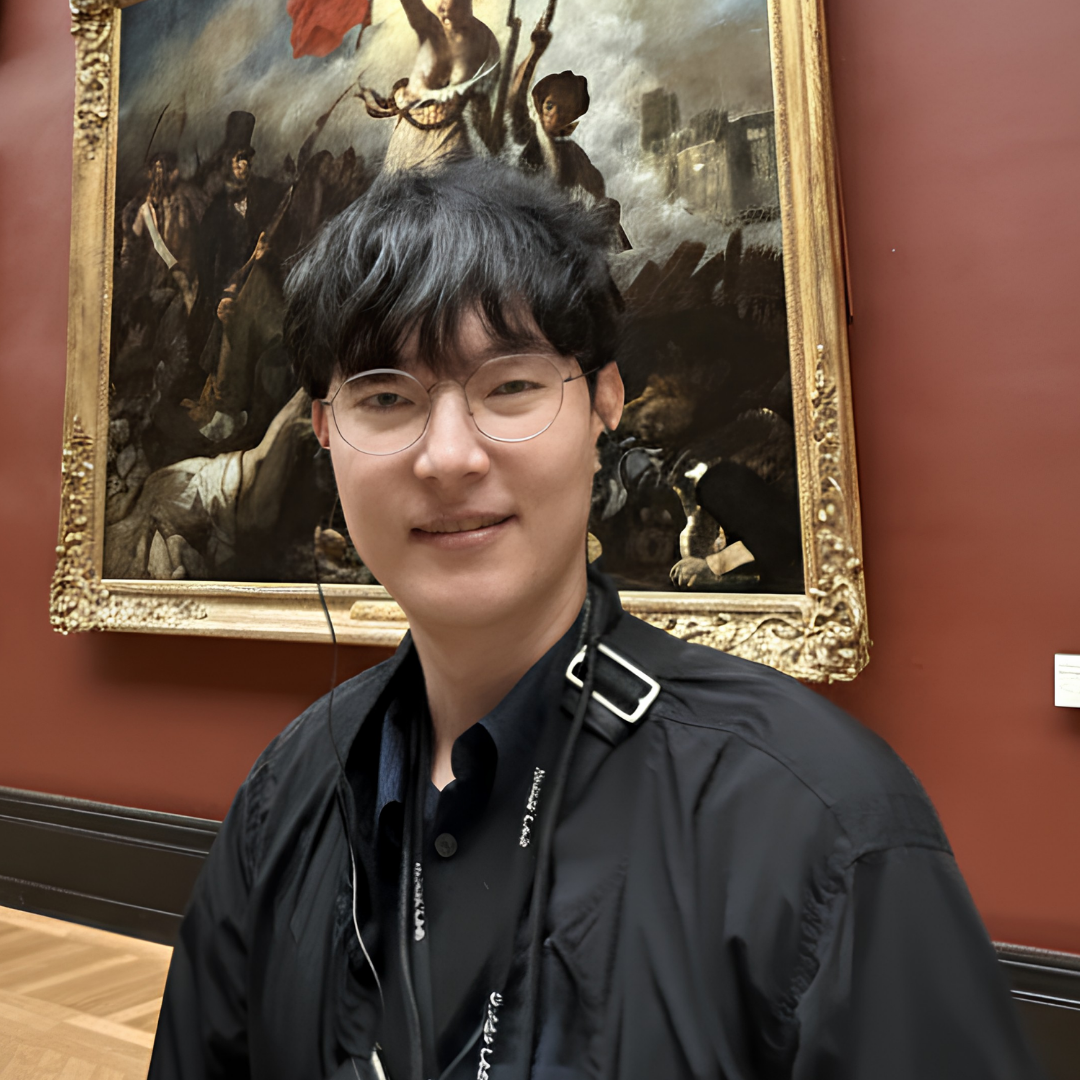
Group Leader Jeonghun Chae is an AI technology development leader who has driven the commercialization of artificial intelligence across a range of industries, including mobility, manufacturing, and healthcare. He holds a master's degree in Electrical and Electronic Engineering from the University of Tokyo, and has structurally solved complex industrial problems based on his research into high-efficiency neural network architectures. At PLK Technologies, he led AI development and drove the commercialization of a driver monitoring system. He later joined A.I.MATICS, where he developed a vehicle B2B AI solution, a vision inspection system for manufacturing sites, an AI-based ECG arrhythmia diagnosis model, and AI call center services — delivering real sales growth and cost savings. He currently leads the company's domain world-model-based industrial application strategy and next-generation AI platform development.