
How Token Efficiency Unlocks the Future of LPU-Based AI Infrastructure
Session Overview
The global AI industry has undergone rapid transformation with the rise of transformer-based large language models, and the paradigm for AI computing infrastructure is being redefined just as quickly. This session introduces the new computing challenges posed by LLM inference services and the latest advances in AI semiconductor technology developed to address them.
The LPU (LLM Processing Unit), a next-generation AI inference semiconductor, is built on an architecture purpose-designed for LLM inference workloads. It is engineered to meet the latency and throughput demands of real-world services while maximizing token efficiency — generating more tokens within a given cost and power budget.
This approach dramatically lowers the total cost of ownership (TCO) for AI services and presents a new computing paradigm capable of sustainably supporting the explosive growth in AI inference demand. Through the innovative architecture and design philosophy behind the LPU, this session shows that the real competitive edge in the AI era lies not in raw compute performance, but in how economically and sustainably tokens can be generated — and looks ahead to where next-generation AI computing infrastructure is headed.
Speaker
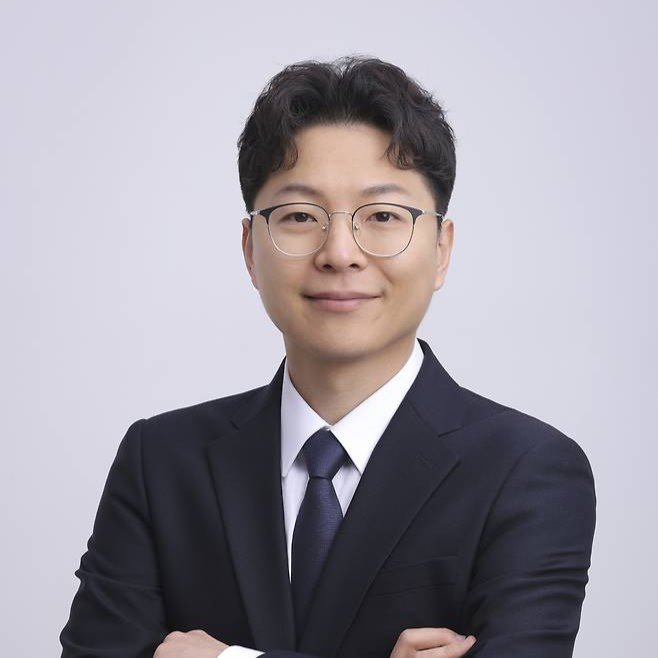
Jooyoung Kim founded HyperAccel in 2023 and is leading the development of the HyperAccel LPU (LLM Processing Unit), an AI semiconductor optimized for large language model inference. Through a high-efficiency inference accelerator built on Samsung's 4-nanometer process and LPDDR5X memory, he is focused on building next-generation AI infrastructure with significantly improved power and cost efficiency.
He has more than 20 years of research and industry experience across AI semiconductor design, system architecture, computing platforms, and product commercialization. Drawing on this background, he leads the research, development, and commercialization of next-generation AI computing technologies.
Before founding HyperAccel, he spent nine years at Microsoft's U.S. headquarters, where he led research and development in AI accelerators and computing infrastructure. Since 2019, he has also served as a professor in the School of Electrical Engineering at KAIST.